Infrastructure Built on Reinforced Ground
Geosynthetics in Shreveport for roadway construction, drainage systems, and site development where soil performance affects structural longevity
Soil alone often lacks the strength or drainage capacity needed to support pavement, retain fill, or manage subsurface water over the decades-long lifespan expected from civil infrastructure. Southern Geo Supply distributes geosynthetic materials engineered to improve soil performance by adding tensile strength, filtration capacity, or separation between incompatible layers. These products are used across civil, industrial, and environmental applications where base failure, settling, or contamination between soil layers would compromise the structure above.
Geosynthetics function by either reinforcing weak soils to carry loads they couldn't support otherwise, separating dissimilar materials to prevent intermixing, or providing drainage pathways that relieve hydrostatic pressure. The material type and specification depend on whether the project requires tensile strength, hydraulic conductivity, filtration without clogging, or a combination of these properties working together beneath the visible construction.
Submit project specifications detailing soil conditions and load requirements to identify which geosynthetic materials match your design criteria.
How Geosynthetics Address Subsurface Challenges
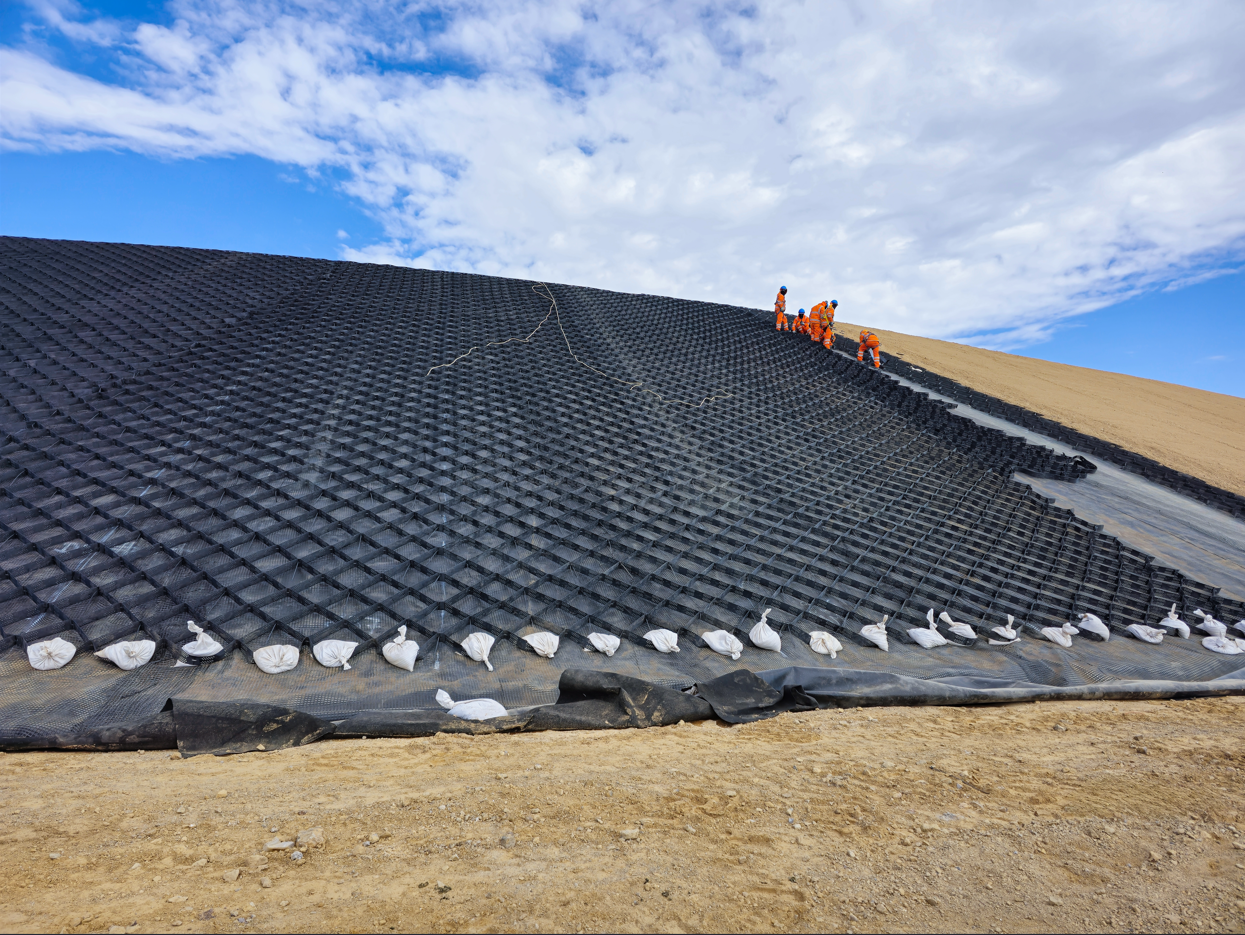
Installation typically involves placing the geosynthetic directly on prepared subgrade, overlapping edges according to engineering drawings, and covering with fill or aggregate that anchors the material while loads above compress the system into a composite structure. Drainage geocomposites include a core that channels water laterally while filter fabrics on each side prevent soil intrusion that would block flow over time.
After construction, the roadway or structure remains level without rutting or differential settlement because the geosynthetic distributes loads across weak soils and prevents aggregate from punching into soft subgrade. Drainage systems continue functioning without clogging because filtered water moves through designed pathways rather than carrying fines that accumulate and block flow. Projects experience fewer maintenance cycles and longer intervals before rehabilitation becomes necessary.
Selection involves matching material properties to the specific failure mode being prevented—whether that's bearing capacity failure in soft clays, erosion of base aggregate into subgrade, or hydrostatic pressure buildup behind retaining structures. Products are available nationwide through coordinated shipping arranged around project schedules and delivery access at each site.
Common Questions About This Material Category
Civil projects require geosynthetics that meet design specifications while remaining practical to install under actual field conditions.
What's the difference between geotextiles, geogrids, and geocomposites?
Geotextiles are fabrics used for filtration and separation, geogrids are grid structures providing tensile reinforcement, and geocomposites combine multiple functions such as drainage and filtration in a single product.
How do geosynthetics extend the lifespan of roadways?
They prevent the intermixing of subgrade soil and base aggregate that leads to loss of structural support, and they distribute wheel loads across wider areas to reduce stress concentrations that cause rutting.
When should geosynthetics be specified instead of increasing base thickness?
When subgrade soils are too weak to support design loads even with thicker aggregate sections, or when site conditions like high water tables make drainage management as important as load support.
What installation errors compromise geosynthetic performance?
Insufficient overlap at seams, damage during fill placement, installation over unprepared or soft subgrade, and failure to maintain tension during placement all reduce the material's ability to function as designed.
Why do projects in Shreveport often require geosynthetics for drainage applications?
The region's clay-rich soils and seasonal rainfall create conditions where subsurface water must be managed to prevent saturation that weakens pavement structures and causes premature failure.
Southern Geo Supply provides technical support in selecting geosynthetic materials that match your project's soil conditions and performance requirements. Contact our team with your engineering specifications and site details to receive accurate quoting and logistics planning for material delivery.