Base Layers That Support Heavier Loads
Geogrid Systems in Shreveport for road construction, retaining walls, and load-bearing areas where soil alone lacks the strength to prevent settlement
Weak or marginal soils compress under load, causing pavement to rut, walls to lean, and structures to settle unevenly over time as traffic or fill weight exceeds the bearing capacity of the native ground. Geogrid systems provide soil reinforcement by creating a mechanical interlock between grid apertures and compacted aggregate, distributing loads laterally and increasing the effective strength of the composite soil-geogrid layer. Southern Geo Supply distributes geogrids in multiple strengths and configurations designed for road construction, retaining wall reinforcement, and heavy load areas where base performance determines whether the project holds or fails under use.
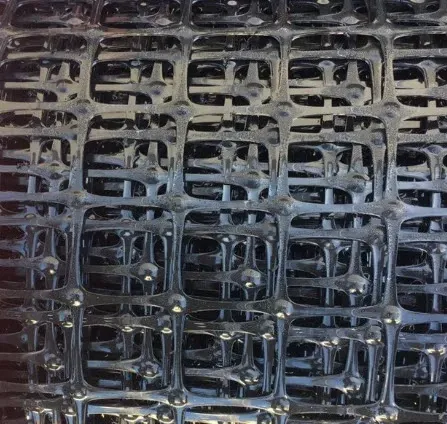
These grid structures function by confining aggregate within their apertures, preventing lateral spreading under vertical loads and allowing thinner base sections to carry weights that would otherwise require much deeper excavation and fill. The grid's tensile strength ties the aggregate mass together, transforming loose material into a reinforced zone that behaves like a stiffer, stronger foundation.
Request project-based recommendations detailing the loads your site will carry and the soil conditions beneath the planned construction.
Why Geogrid Installation Improves Structural Stability
Geogrid is placed on prepared subgrade, pulled tight to remove wrinkles, and covered with lifts of aggregate that are compacted to lock stone into the grid openings and activate the reinforcement mechanism. Retaining wall applications use multiple geogrid layers embedded horizontally into backfill at vertical intervals calculated based on wall height and surcharge loads.
After installation and load application, the roadway or platform remains stable without rutting because the geogrid prevents aggregate from shifting laterally under wheel loads, and the reinforced base distributes pressure deeper into the subgrade rather than concentrating stress at the surface. Retaining walls stay plumb and resist outward movement because geogrid layers extend into the retained soil mass and counteract the lateral earth pressure trying to push the wall forward. You'll see pavement that doesn't develop depressions in wheel paths and walls that hold their alignment without leaning or cracking over years of service.
Geogrids are offered in biaxial configurations for applications requiring strength in two directions, and uniaxial types for walls where reinforcement is needed primarily perpendicular to the face. Selection depends on the load magnitude, subgrade strength, and whether the goal is reducing base thickness on a haul road or stabilizing fill behind a retaining structure that must not move.
What Property Owners Usually Ask
Projects specifying geogrid systems need to understand how the material functions once buried under tons of aggregate and subjected to years of load cycles.
What makes geogrid different from geotextile for base reinforcement?
Geogrid provides tensile reinforcement through mechanical interlock with aggregate, creating a composite layer stronger than soil alone, while geotextile primarily separates and filters without contributing significant tensile strength.
How much base thickness can be reduced when geogrid is used?
Depending on subgrade strength and design loads, geogrid reinforcement can allow reductions of 30 to 50 percent in aggregate depth, which translates to significant material cost savings on large projects.
When should geogrid be specified instead of simply excavating deeper and placing more stone?
When subgrade is so weak that additional aggregate depth won't prevent failure, when project budgets or material availability limit base thickness, or when site access makes hauling large volumes of stone impractical.
What installation practices ensure geogrid performs as designed?
Proper subgrade preparation, maintaining tension during placement, achieving specified compaction in aggregate lifts above the grid, and using stone gradations with angular particles sized to lock into grid apertures all affect whether the reinforcement mechanism activates under load.
Why do commercial and infrastructure projects in Shreveport frequently require geogrid?
The region's clay subgrades often have low bearing capacity when saturated, and seasonal moisture changes cause volume shifts that stress pavements and structures unless base layers are reinforced to resist deformation.
Southern Geo Supply provides geogrid systems suitable for commercial and infrastructure projects where long-term load support justifies reinforcement. Contact us with your project's soil data and load specifications to receive material recommendations and flexible shipping options that coordinate with your construction phases.